

BDD (Behavior Driven Development) is a testing methodology. BDD aims to make the testing process more effective by focusing on the behavior of the software. It allows us to write test scenarios as plain text using a language called Gherkin and convert them into automated tests. The Gherkin language appears understandable and natural to everyone.
A scenario written in Gherkin format looks like the code block below:
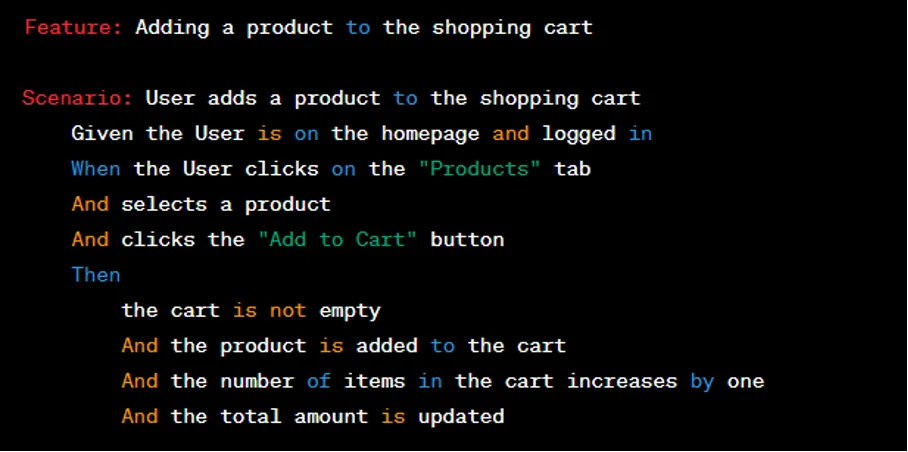
BDD expresses test scenarios using keywords such as Given, When, Then, and And. These words define the precondition, event, and result parts of the test scenarios. BDD is actually derived from another methodology called TDD (Test Driven Development).
While TDD suggests writing test scenarios before coding and developing the code according to the tests, BDD testing emerged to eliminate the complexity of TDD and to create a common language among business units, developers, and test engineers.
The key features of BDD testing are:
- Expressiveness of Scenarios
- Scenario-Based Tests
- Triple Collaboration
- Automatable Scenarios
BDD is used in software projects by increasing collaboration and communication and is particularly compatible with Agile and other rapid development methodologies.